Affiliate Disclosure: Some links below are affiliate links. If you book through them, we may receive a small commission at no additional cost to you. Prices and availability change frequently, so always confirm details on the booking site.
Table of Contents
- Europe eSIM vs Physical SIM at a Glance
- How Much Does Mobile Data Cost in Europe?
- eSIM Pros and Cons
- Physical SIM Pros and Cons
- Which Option Should You Choose?
- Does It Work Across European Countries?
- What to Check Before Buying
- Recommended Europe eSIM Providers
- Quick Decision Guide
- Frequently Asked Questions
- Final Checklist
- Sources and verification notes
Europe eSIM vs Physical SIM: Prices, Pros, Cons, and Which Is Better?
TripCore.org | Practical guide for travelers visiting Europe
Last updated: October 2026
Editorial Disclosure: This article may contain affiliate links. If you purchase through one of our links, TripCore may receive a commission at no additional cost to you. Our recommendations are based on factors such as coverage, price, validity, voice/SMS support, hotspot rules, and ease of activation.
Quick Answer
For most short-term travelers visiting multiple European countries, a travel eSIM is the most convenient option because it can be installed before departure and used alongside a home SIM. A physical SIM may be better if your phone does not support eSIM, you need a local phone number, or you plan to stay in one country for several weeks or months.
Before buying either option, check your phone’s eSIM compatibility, carrier-unlocked status, the plan’s country list, data validity, voice/SMS support, hotspot rules, and fair-use policy.
Europe eSIM vs Physical SIM at a Glance
|
Feature |
Physical SIM |
Travel eSIM |
|---|---|---|
|
Typical cost |
Varies by country, data allowance, and validity |
Varies by provider, data allowance, validity, and destination |
|
Installation |
Insert a physical SIM card |
Scan a QR code or install through an app |
|
Home number |
May require removing or disabling your home SIM |
Can often run alongside your home SIM on compatible, unlocked phones |
|
Local phone number |
Often available with local carrier plans, but not guaranteed |
Usually data-only, although some plans include voice, SMS, or a local number |
|
Multi-country use |
Depends on carrier roaming coverage |
Regional plans may cover multiple countries |
|
Best for |
Phones without eSIM, local numbers, or long stays in one country |
Compatible phones, short trips, and multi-country travel |
Prices change frequently. Treat any price range as a representative example and check the final payable amount on the provider’s official page before purchasing.
How Much Does Mobile Data Cost in Europe?
There is no single Europe-wide price. The final cost depends on the country, provider, data allowance, validity period, taxes, network partners, voice/SMS inclusion, and promotions.
Travel eSIM prices
Travel eSIMs are often priced as short-term data packages. Regional Europe plans may be convenient for multi-country itineraries, while country-specific plans may be cheaper if you are staying in one destination. Compare the price per gigabyte, but also check the validity period and whether the plan supports hotspot use.
Physical SIM prices
A local physical SIM can be cost-effective, especially for longer stays. However, airport shops may charge a tourist premium, and the cheapest local options may require a shop visit, identity verification, a local-language purchase process, or a specific top-up method.
What affects the final cost?
- The number of gigabytes included
- The plan’s validity period
- The countries covered
- Whether voice calls or SMS are included
- Whether hotspot or tethering is allowed
- Taxes, activation fees, and top-up costs
- Fair-use or speed-management policies
- Airport pricing and promotional discounts
eSIM Pros and Cons
Advantages of an eSIM
- Install it before departure and connect soon after landing.
- Avoid visiting an airport store or searching for a local SIM.
- Keep your home SIM available on compatible dual-SIM phones.
- Use one regional plan across multiple countries when the plan supports your itinerary.
- Reduce the risk of losing your physical home SIM.
Limitations of an eSIM
- Your phone must support eSIM and usually must be carrier-unlocked.
- Many travel eSIMs are data-only and do not include a local phone number.
- Coverage and speed depend on the provider’s network partners and local conditions.
- Some plans restrict hotspot use or apply fair-use speed management.
- Installation can be confusing if you do not have Wi-Fi or a second screen available.
Physical SIM Pros and Cons
Advantages of a physical SIM
- Works with phones that do not support eSIM.
- Local carrier plans may include a local phone number, voice, and SMS.
- Can be a good value for long stays in one country.
- A store employee may help with activation or troubleshooting.
Limitations of a physical SIM
- You may need to remove your home SIM and risk misplacing it.
- Airport prices can be higher than local retail prices.
- Some countries or plans require identity verification or passport registration.
- A local SIM may not provide the same multi-country convenience as a regional eSIM.
Which Option Should You Choose?
Choose an eSIM if…
- Your phone supports eSIM and is carrier-unlocked.
- You are visiting several European countries.
- You want data immediately after landing.
- You want to keep your home SIM available for calls or verification messages.
- You mainly need mobile data for maps, rideshare apps, messaging, and travel bookings.
Choose a physical SIM if…
- Your phone does not support eSIM.
- You need a local phone number or traditional voice/SMS service.
- You are staying in one country for several weeks or months.
- You want help from a local carrier store.
- You have confirmed the plan’s roaming coverage for every country on your itinerary.
Does It Work Across European Countries?
A Europe-wide eSIM does not necessarily cover every country geographically located in Europe. Check the provider’s country list before buying, especially if your itinerary includes the United Kingdom, Switzerland, Turkey, or Balkan countries.
Many regional eSIMs work through listed roaming partners. The available network, speed, and coverage depend on the specific plan and local conditions. A regional eSIM does not guarantee that your phone will always connect to the strongest network, so check whether manual network selection is supported if reliable coverage is critical.
EU/EEA roaming
A SIM from an EU/EEA operator may work in other EU/EEA countries under roaming rules, but fair-use limits, plan restrictions, and country exclusions may apply. The United Kingdom, Switzerland, Turkey, and non-EU destinations should be checked separately. Always review the provider’s current roaming terms before relying on a local SIM for a multi-country trip.
What to Check Before Buying
- Confirm that your exact phone model and region support eSIM.
- Make sure your phone is carrier-unlocked.
- Check whether the plan covers every country on your itinerary.
- Confirm the data allowance and validity period.
- Check when the validity period begins: installation, activation, or first network connection.
- Check whether voice calls and SMS are included if you need them.
- Check whether hotspot or tethering is allowed.
- Read the fair-use policy for unlimited-style plans.
- Review the refund and customer-support policy.
Recommended Europe eSIM Providers
The best provider depends on your itinerary and priorities. Compare the exact plan rather than choosing only by brand name.
|
Provider or option |
May suit travelers who… |
Check before buying |
|---|---|---|
|
Airalo |
Want flexible data packages and country or regional options |
Data-only status, validity, coverage, and current price |
|
Holafly |
Prefer large or unlimited-style data plans |
Fair-use policy, speed management, hotspot rules, and validity |
|
Orange Holiday |
May need voice/SMS options from a major European operator |
Country coverage, activation requirements, and current plan terms |
|
Ubigi |
Want to compare budget-oriented data plans |
Network partners, hotspot rules, support, and current coverage |
|
Local physical SIM |
Want a local number or a longer stay in one country |
ID requirements, roaming coverage, top-up process, and store pricing |
Provider features, prices, and restrictions can change. Check the official product page and terms for the exact plan you intend to purchase. ‘Unlimited’ plans may still be subject to fair-use policies, speed reductions, or hotspot limits.
Quick Decision Guide
|
Your situation |
Recommended option |
Why |
|---|---|---|
|
Visiting three or more European countries |
Regional eSIM |
One plan may cover multiple destinations |
|
Need a local phone number |
Local physical SIM or voice-enabled eSIM |
Many travel eSIMs are data-only |
|
Phone does not support eSIM |
Physical SIM |
eSIM cannot be installed |
|
Staying several months in one country |
Local SIM or local eSIM |
Long-term plans may offer better value |
|
Need data immediately after landing |
eSIM installed before departure |
No airport shop visit required |
|
Need laptop hotspot |
Plan that explicitly allows tethering |
Some plans restrict hotspot use |
|
Need to keep your home number |
Dual-SIM setup |
Keep the home SIM as a secondary line if supported |
Frequently Asked Questions
Can I use my home WhatsApp account with a European eSIM?
Yes. WhatsApp is linked to your account and phone number, not simply to the SIM currently providing data. A data-only eSIM can provide internet access while you continue using WhatsApp with your existing account.
Can I keep my Korean or home phone number while using a Europe eSIM?
Often, yes, if your phone supports dual SIM and your home line remains active. Turn off data roaming on your home line if you want to avoid unexpected roaming charges, and check your home carrier’s voice and SMS rules.
Do I need an unlocked phone to use an eSIM?
Usually, yes. A carrier-locked phone may reject an eSIM from another provider. Check the phone’s unlock status before purchasing.
Can I make regular phone calls with a travel eSIM?
It depends on the plan. Many travel eSIMs are data-only, so calls may require WhatsApp, FaceTime Audio, Messenger, or another internet-based service. Choose a voice-enabled eSIM or local SIM if you need a regular mobile number.
Is a Europe eSIM cheaper than buying a SIM at the airport?
It can be, but not always. Compare the exact data allowance, validity, taxes, voice/SMS, hotspot rules, and coverage rather than comparing the headline price alone.
Does a Europe eSIM work in the UK and Switzerland?
Only if the specific plan includes those destinations. Do not assume that a plan labeled ‘Europe’ covers every European country.
Can I use hotspot with a Europe eSIM?
Only if the plan and device allow tethering. Check the exact plan terms because some unlimited-style plans limit hotspot data or prohibit tethering.
Should I install the eSIM before flying?
Usually, yes. Install it while you have reliable Wi-Fi, but follow the provider’s activation instructions because some plans start their validity when installed and others start when they first connect to a supported network.
What happens if I lose my physical home SIM while traveling?
You may lose access to calls or SMS verification codes, including banking one-time passwords. Store a physical SIM safely or use a dual-SIM setup when possible.
Final Checklist
- ☐ My phone supports eSIM or I have chosen a compatible physical SIM.
- ☐ My phone is carrier-unlocked.
- ☐ The plan covers every country on my itinerary.
- ☐ I know the data allowance, validity period, and activation rule.
- ☐ I have checked voice, SMS, and hotspot support.
- ☐ I understand the fair-use policy and refund terms.
- ☐ I know how to keep my home number active without unexpected roaming charges.
Sources
Prices, coverage, fair-use rules, activation procedures, and country lists change frequently. Review this article whenever a provider changes its terms or whenever a new travel season begins.
Suggested official references:
- European Commission – Roaming in the EU
- Apple Support – Using Dual SIM with eSIM
- Samsung Support – eSIM support
- Airalo – Europe eSIM
- Holafly – Europe eSIM
- Orange Travel – Travel SIM/eSIM
- Ubigi – Europe eSIM
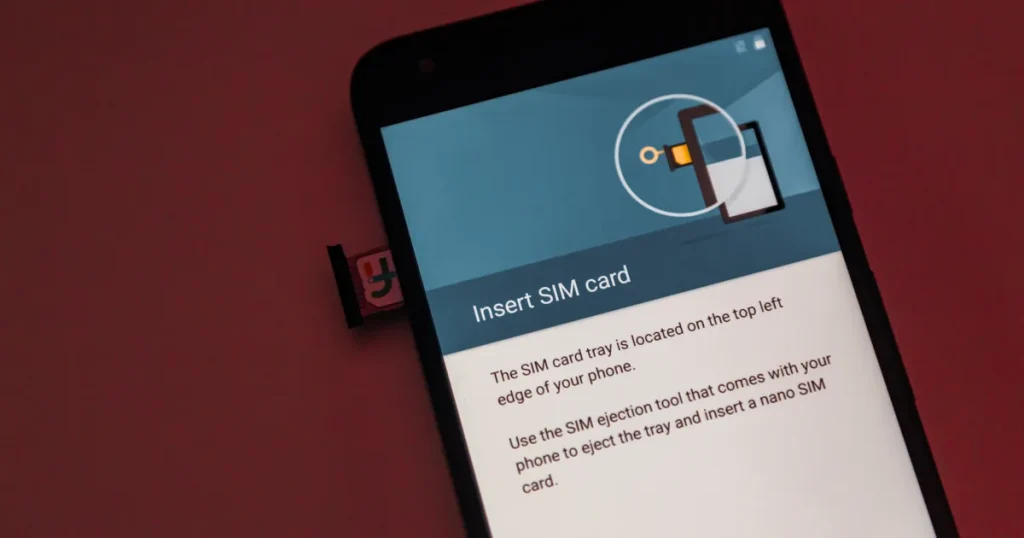
Featured image: “Insert SIM Card – Android LG Nexus 5X – Project Fi” by Tony Webster, licensed under CC BY 2.0, via Wikimedia Commons. Cropped and resized.